HOW TO TELL IF YOUR CAR NEEDS AN ALIGNMENT
The last thing you want to experience when you’re behind the wheel are any unusual behaviors from your car. It’s common to focus on aspects of driving like saving gas and making sure the brakes work, but it’s also important to consider your car’s wheel alignment. This is crucial for safety, steering, and car handling and performance on the road in all kinds of weather.
In this article, we’ll talk about how to tell if your car needs a wheel alignment, why it’s important, and where to get it done.
What is a Wheel Alignment?
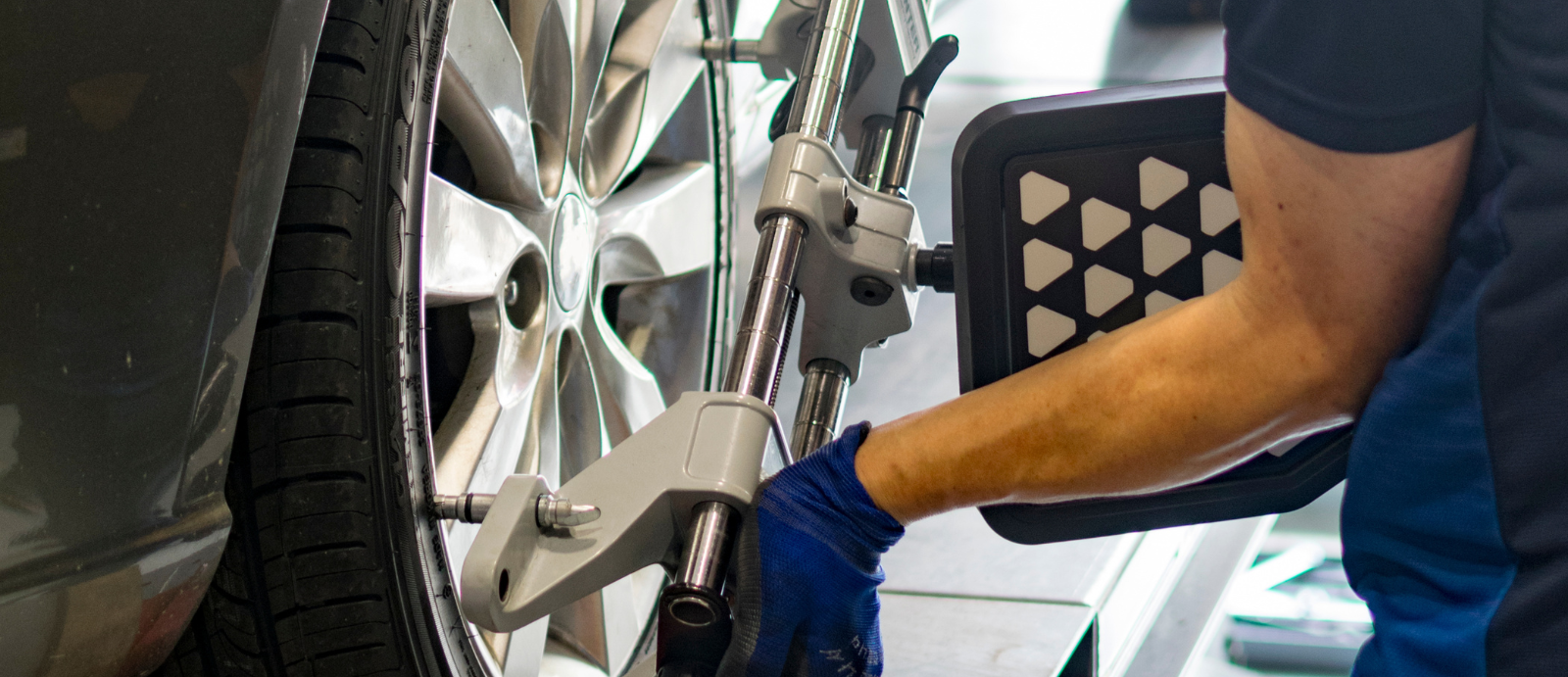
A wheel alignment is an important car maintenance task that involves adjusting the angles of your car’s wheels to maximize contact and grip with the road. As a result, it can help your car drive better by improving how it handles turns as well as how efficiently it uses fuel. Proper wheel alignment also makes sure your tires wear evenly and last longer. It’s not just about keeping your car going straight; it’s about making your whole driving experience better.
Signs You Need a Wheel Alignment
If you think your car might have a wheel alignment problem, here are some signs to look out for:
1. Crooked Steering Wheel: If your steering wheel isn’t straight when you’re driving in a straight line, it’s a sign that your wheels might be out of alignment. Look at your car’s emblem in the middle of the steering wheel; if it’s crooked by more than a little bit, you may need an alignment.
2. Car Pulls to One Side: On a straight road, if you have to work harder to keep the car going straight, it might be pulling to one side. This often happens when the wheels aren’t aligned correctly.
3. Uneven Tire Wear: Uneven tire wear patterns can show that your car’s tire alignment is off. Sometimes, you can see this yourself by looking at your tires.
4. Loose Steering: If your steering feels wobbly or unstable, it could be a sign of bad alignment. It feels like your car isn’t quite staying on course, and you have to keep adjusting the steering.
5. Steering Wheel Doesn’t Center: After turning, your steering wheel should go back to the center by itself. If it doesn’t, it’s another sign that the car alignment isn’t right.
6. Decreased Fuel Economy: It takes more power to roll a tire if it is not pointing straight. If your car is not in alignment, you may notice you’re burning more fuel than usual.
7. Less Stopping Power: Poor car alignment can result in increased stopping distance and time. If it takes your vehicle longer in both distance and time to come to a stop, it’s time to see a professional right away.
Watching out for these signs can make your car drive better, make your tires last longer, and keep you safer on the road.
The Importance of Wheel Alignment
Wheel alignment isn’t just about driving straight; it’s important for making your tires last, saving gas, and staying safe. Ignoring alignment issues can make driving more stressful and cause bigger problems in the long run. In addition, if you drive a newer car with an advanced drive assist system, such as lane departure, adaptive cruise control, traction control, or collision avoidance, it is dependent on proper vehicle alignment.
Is it OK to Drive with a Bad Wheel Alignment?
Driving with poor wheel alignment is not recommended. Not only is it uncomfortable, but it can lead to significant issues that become costly over time. Poor car alignment causes suspension stress, steering difficulty, compromised handling and braking, increased fuel consumption, and premature tire wear. Worst of all, it increases the risk of an accident.
Misaligned wheels won’t resolve themselves; professional help is needed. If you notice symptoms of bad alignment, seek expert assistance immediately to avoid long-term damage and safety risk.
How Often Should I Check My Alignment?
How often you should check your car alignment depends on things like the type of car you have, where you drive, and how you drive. As a general rule, it’s a good idea to check it every 6,000 miles or as your car’s manual suggests. If you’ve had repairs on your steering or suspension, you should check it again to make sure everything’s okay. And if you notice any of the signs above, it’s time to see a professional automotive technician or mechanic.
Getting a Wheel Alignment at Mr. Tire
If you’re looking for a reliable place for a wheel alignment check, consider Mr.Tire. Our technicians are highly trained and use the latest technology to make sure everything is just right. Plus, when you come in, you’ll get a FREE ConfiDrive Performance Review® to keep your car in top shape.
Ready to Make an Appointment?
Now is the perfect time to make sure your car is in great shape. If you’ve seen any signs of alignment problems or it’s time for a check-up, book an appointment with Mr. Tire today. And don’t forget to check out our special offers on tires, oil changes, and other car services to keep your car running smoothly.